4News

Gao Bo introduces the application of temperature sensor in automobile industry
As we all know, the application of temperature sensors is very wide, so in the automotive industry, its assembly, what has changed?
Buses are fitted with temperature sensors to prevent spontaneous combustion
During the high temperature in summer, spontaneous combustion of buses often occurs. How to prevent the occurrence of spontaneous combustion of buses is also particularly important. The bus company in Taiyuan, Shanxi Province, has installed temperature sensors on some of its buses to ensure bus safety.
Generally speaking, the spontaneous combustion accident of buses is not unrelated to the longer operation life of vehicles and the aging of internal lines. Generally, vehicles with a long operating life and vehicles with rear engines are prone to excessive temperature in the engine compartment during operation, resulting in accidents such as fire.
The driver of the rear engine vehicle is difficult to find the problem of too high engine temperature, so the installation of temperature sensors for alarm can play a greater role. Bus companies install temperature sensors on some buses that automatically alarm when the engine temperature reaches a set threshold. The installation of temperature sensors can effectively improve various safety hazards of the engine, so as to ensure driving safety and personal safety of passengers.
New energy vehicles: energy saving and emission reduction
At present, "energy saving and emission reduction" is one of the main directions of global industrial development, which on the one hand refers to the need to continue to develop internal combustion engine "energy saving and emission reduction" technology, on the other hand refers to the need to strengthen the development of new energy vehicles.
The sensors used in hybrid/electric vehicles mainly include sensors to detect the temperature of the battery, temperature sensors to monitor the motor, and temperature sensors for battery cooling systems. The battery of a hybrid/electric vehicle provides the best energy output only at a precisely defined operating temperature, which requires reliable monitoring and regulation of the battery temperature to prevent overheating of the battery and maximize its working life. Most current hybrid/electric vehicle battery designs use NTC temperature sensors. To measure its temperature.
Electric motors are also another basic component of hybrid/electric vehicles. In order to ensure the long life of the motor and its best performance, the temperature of the electric motor also needs to be continuously monitored, operating as accurately as possible in the temperature range above 140 ° C, so determining the temperature of the stator windings is also crucial, which is the only way for the motor to take full advantage without the risk of overheating. In order to measure the temperature of the stator, it is also required that the sensor should be easy to install, and ensure that the sensor is protected from mechanical pressure during installation and operation and has a high dielectric strength, which prevents flashover between the driver current circuit and the measuring current circuit.
In addition, in practical applications, because the battery and the driver are also important safety components of hybrid/electric vehicles, the reliability and shock resistance requirements of the sensor are also high, and it is necessary to provide the best comprehensive solution from the selection of electronic components, process and reliability verification.
Due to the importance of sensors in electronic control systems, in a sense, the competition of advanced vehicles is the competition of sensors, and countries around the world attach great importance to its theoretical research, new material applications, and product development.

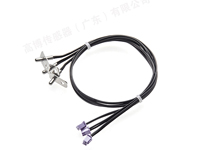 Electrical temperature sensor
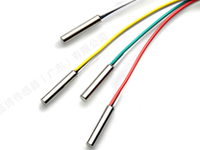 Harness temperature sensor
 NTC thermistor
 Industrial sensor
 Dynamic state
 Information
 FAQ
FAQ Company profile
 workshope
 Qualification
 Website two-dimensional code